
Gaps between teeth, also called diastemas, are more common than many people think. Some people are born with spacing due to jaw size or tooth size differences, while others develop gaps over time because of shifting teeth, missing teeth, or habits like tongue thrusting.
For many patients, these spaces are mostly a cosmetic concern. They may affect confidence when smiling or speaking, even if they do not cause pain or functional problems.
That’s where cosmetic dentistry options like veneers often come into the conversation.
How Veneers Can Close Gaps
Veneers are thin, custom-made shells that are bonded to the front surface of teeth. They are typically made from porcelain or composite materials and are designed to improve the appearance of color, shape, and alignment.
When it comes to gaps, veneers work by slightly widening the visible surface of the teeth on either side of the space. By carefully adjusting the shape and size of each veneer, a dentist can create the appearance of a more even, closed smile without physically moving the teeth.
In many cases, this allows patients to achieve noticeable cosmetic improvements in a relatively short amount of time compared to orthodontic treatment.
Because veneers are custom-designed, they can also improve overall smile symmetry while addressing spacing concerns at the same time.
When Veneers Are a Good Option
Veneers tend to work best for small to moderate gaps where the underlying bite is healthy and the teeth are otherwise well-aligned.
They are often chosen by patients who want a faster cosmetic solution or who are primarily concerned with the appearance of spacing rather than functional alignment issues.
Veneers can also be a good option when patients are already planning other cosmetic improvements, such as whitening or reshaping teeth, since they can create a more uniform and polished look.
When Orthodontics May Be the Better Choice
While veneers can be very effective for cosmetic correction, they are not always the right solution for every type of gap.
If spacing is caused by significant bite issues, jaw alignment problems, or widespread crowding or shifting, orthodontic treatment may be a better long-term approach. Braces or clear aligners physically move teeth into healthier positions, which can improve both function and aesthetics.
In some cases, treating alignment issues first and then using veneers for finishing touches can provide the most balanced result.
Dentists typically evaluate factors such as bite stability, tooth health, and long-term wear patterns before recommending veneers as the primary solution.
Additional Benefits of Veneers
Beyond closing gaps, veneers can address a variety of cosmetic concerns at the same time.
They can improve the appearance of chipped, stained, uneven, or slightly misshapen teeth. Because they are color-matched and custom-designed, veneers also provide a bright, uniform smile that resists staining better than natural enamel.
Veneers are often chosen for their ability to deliver fast, noticeable improvements in smile aesthetics.
What to Expect During Treatment
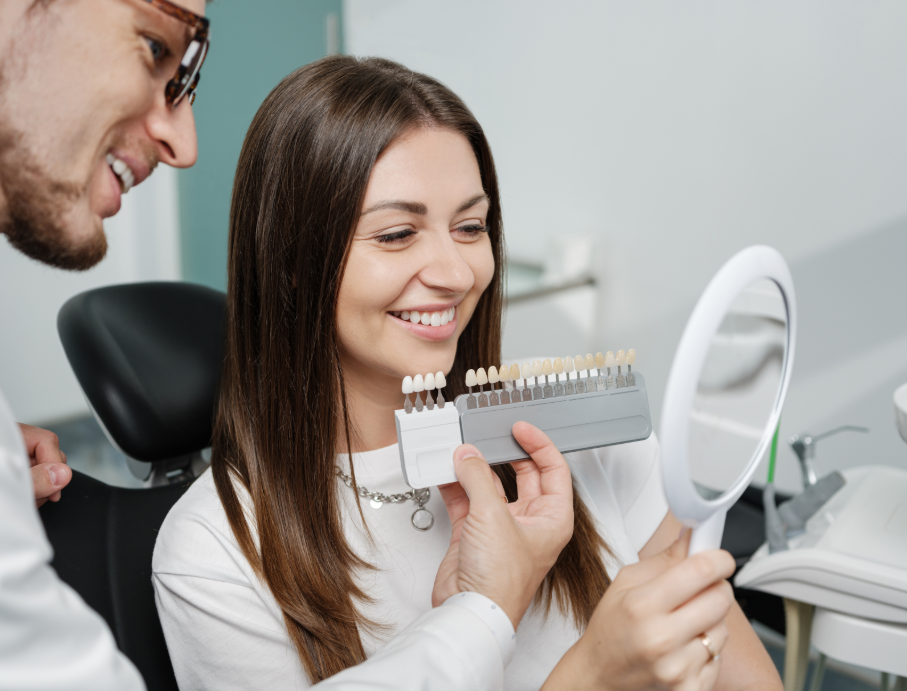
Getting veneers typically involves a consultation, tooth preparation, impressions or digital scans, and placement of the final restorations.
During planning, your dentist will evaluate the size of the gaps and determine how many veneers are needed to achieve a natural-looking result. In some cases, only a few teeth need treatment, while in others a full smile design approach is recommended.
Because veneers are permanent, careful planning is essential to ensure long-term success and natural appearance.
The Final Word on Your Smile
Veneers can be an excellent solution for closing small gaps and enhancing overall smile appearance, especially when patients want a fast and cosmetic-focused result. However, in cases where alignment or bite issues are present, orthodontic treatment may be the more complete solution.
A personalized evaluation is the best way to determine which approach will deliver the healthiest and most natural-looking outcome.
About the Practice
At East Center Dental, patients are treated by Dr. Mike Rudolph, a general dentist with over 30 years of experience serving the Warsaw community. Dr. Rudolph focuses on comprehensive, family-centered care built on trust, education, and long-term relationships, offering a full range of preventive and restorative services. The practice is dedicated to providing personalized treatment in a comfortable, welcoming environment where patients can feel confident in their dental care decisions.
Call us at (574) 269-1787 or schedule your appointment online.