
Dental Bridges – Warsaw, IN
Make Your Teeth Complete!

Missing even a single tooth can drastically change the way that you live your life. It can make it much harder to eat, to talk, and most importantly to project confidence when you meet people for the first time. It’s a little thing that can have a massive impact on how you live your life.
That means that replacing your teeth can be equally valuable. If you want to close the holes in your smile and you happen to be near Warsaw, IN, a dental bridge from East Center Dental could be just what you need. Make an appointment with us and we’ll show you how a single restoration can make your teeth complete.
Why Choose East Center Dental for Dental Bridges?
- Restorations Made from Cutting-Edge Dental Materials
- Comfortable Dental Office with Sedation Options for Anxious Patients
- Accurate, Mess-Free Dental Impressions
What is a Dental Bridge?
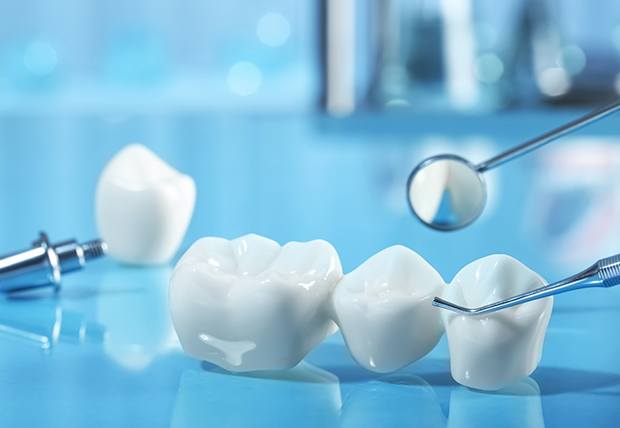
Dental bridges are one of the most effective and efficient ways to fill the holes in your smile. They consist of one or more false teeth (pontics) sandwiched between two dental crowns. These crowns can be affixed in place to “bridge” the gaps in your smile.
Dental bridges are typically made from some kind of ceramic or tooth-colored dental material. The nature of this restoration is such that they can usually only replace teeth that are next to each other, so if you are missing several teeth across your smile, it might be necessary to pursue another tooth replacement option.
Types of Dental Bridges
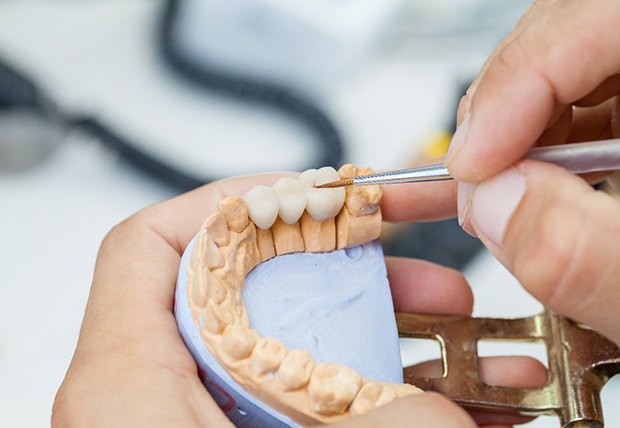
There are two different kinds of dental bridges, each of which are suited to different kinds of patients. We’ll be able to talk to you more at a consultation about what kinds of solutions will work best for you, explaining the options that are available and what they each entail. Until then, here’s what you should know about the types of dental bridges that are out there.
Traditional Dental Bridges
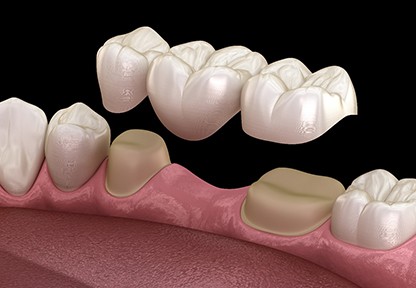
Traditional dental bridges are affixed to the natural teeth using dental crowns, using the healthy parts of your smile for support. This is a fairly simple process that doesn’t involve surgery of any kind. This style of dental bridge also doesn’t rely on the jawbone under the missing teeth for support, which is easier for patients who have dealt with bone reabsorption.
Implant Bridges
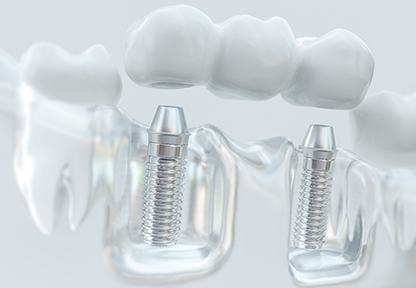
Implant bridges, on the other hand, are attached to thin metal posts that are surgically implanted into the jaw. This makes modifying healthy teeth in order to secure your dental bridge in place unnecessary. It also offers the restoration considerably more bite strength than traditional dental bridges.
The Benefits of Getting a Dental Bridge

Leaving a hole in your smile can have a series of deleterious effects on your teeth. It’s common for the surrounding teeth to move to fill the gaps, which can create serious misalignment issues. This is in addition to the subjective effects of missing teeth; the dip in your confidence, as well as increased difficulty with eating and speaking.
Dental bridges are a simple, cost-effective way of replacing the teeth that you’re missing with just a single prosthetic. If you’re interested in learning more about what they could do for you, make an appointment for a consultation with us today!
Dental Bridges FAQs
What are dental bridges made from?
It’s only natural to want to know as much as you can about potential solutions for rebuilding your smile, like what materials your restoration is made from. Dental bridges can be made from various options, like gold, metal alloys, or resin, but the default material is usually porcelain or another resilient, tooth-colored ceramic.
This is because it reflects light naturally like enamel, is durable enough to withstand the pressure of daily biting and chewing, and can be customized to match your natural teeth for beautiful results meant to last.
Are dental bridges removable?
If you’ve ever heard of partial dentures referred to as “removable bridges”, you might wonder whether dental bridges are intended to be frequently taken out and reinserted for cleanings.
However, this terminology is misleading and refers to very different restorations. Partial dentures typically contain metallic clips that anchor to healthy teeth in your mouth, and are indeed meant to be removed to brush all surfaces twice daily. Meanwhile, bridges are cemented over healthy abutment teeth or specially placed dental implants, and aren’t intended to come off unless a qualified professional is removing them for repairs or replacement.
Does getting a dental bridge hurt?
Many patients worry that rebuilding their smile with one of these lifelike prosthetics might hurt, and it is sometimes possible to experience discomfort around certain preparations. For example, our team must remove a small amount of enamel from the natural teeth serving as anchors for your restoration, which can result in tenderness or sensitivity. It’s also normal to feel sore or swollen for several days after dental implant placement.
Dr. Rudolph offers different options for sedation and can numb your mouth for procedures so you feel calm and comfortable the entire time. Then, any associated aches or inflammation can often be managed with over-the-counter solutions, like acetaminophen or ibuprofen, once these medications wear off.
How long do dental bridges last?
These replacement teeth are made from resilient materials and often last between 5 and 15+ years when cared for correctly. However, different factors, such as your oral hygiene habits, dietary decisions, and the placement of your bridge can all potentially affect its lifespan.
Most patients can help maintain their restoration by:
- Brushing and flossing twice daily to prevent cavities and gum disease that can damage the enamel and tissues holding your bridge in place, causing it to fail.
- Avoiding overly dark, crunchy, hard, or sticky foods that might damage, stain, or dislodge your restoration.
- Visiting our team every 6 months for a routine checkup and cleaning so we can monitor its condition and function over time.