
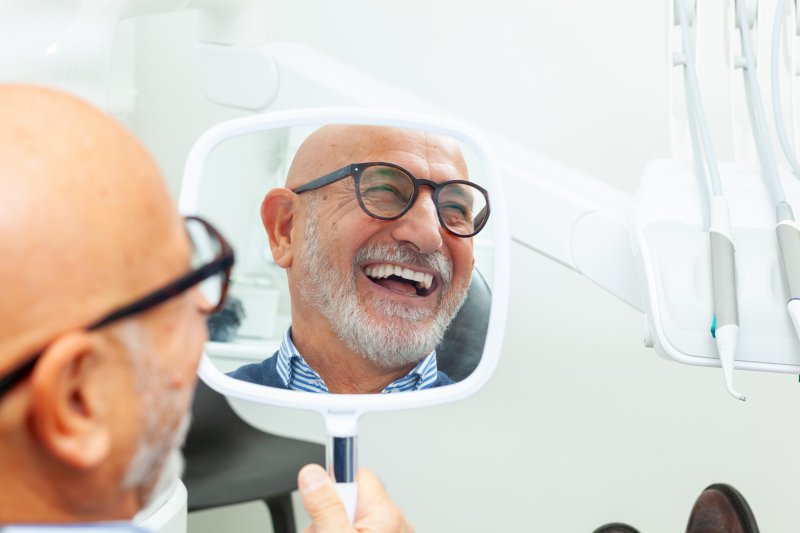
If you started your journey to a complete smile with dentures but now want to transition to dental implants, you’re not alone. In fact, many individuals have done the same. Here are the steps that are required to make the switch and what you can do to ensure it is successful.
Why Do Patients Want to Switch From Dentures to Dental Implants?
There are several reasons why patients choose to no longer wear dentures. They include:
- Frequent relines and replacements (every 5-7 years)
- Ill-fitting dentures because of changes in facial features
- Dentures slipping or falling out while eating or speaking
- Discomfort caused by poor fit
How to Transition to Dental Implants
After wearing dentures, you may decide you’d rather invest in dental implants. If so, here are the steps that are required:
- You must meet your dentist for a consultation – This will allow them to evaluate the status of your oral and overall health and the density of your jawbone. If it has been a long time since you lost your natural teeth, you will likely require a bone graft to help generate greater density for adequate implant support.
- Undergo Implant Placement – If you are cleared for implant placement, understand that there is a longer healing time than with dentures. Titanium posts will be placed within your jawbone, which means you will need to recover at home and allow your bone and gums to fully heal, which can take 3-6 months.
- You Will Wear Temporary Teeth – You will likely wear a set of temporary teeth while waiting for your finalized restoration. This will offer improved aesthetics and allow you to use your teeth to eat and speak; however, they do not hold up as well against pressure as your crown, bridge, or denture will.
- Receiving Your Final Restoration – Once your restoration is ready, your dentist will secure it in place. You can then begin to use your teeth as normal, but you may need to adjust to the newness of your teeth and how they feel.
Tips to Ensure Success
Ensuring a successful transition is essential, and you can do this by:
- Following post-op surgical instructions to ensure no complications occur (i.e., excessive bleeding, implant failure, etc.).
- Keeping up with your oral hygiene routine to ensure gum disease and dental decay do not develop.
- Maintaining follow-up appointments with your dentist to allow for a thorough examination.
Switching to dental implants is a wise decision – one you will not regret, especially once you see the kind of results you’ve been longing for.
About the Author
Dr. Mike Rudolph has over 30 years of experience in dentistry. With years of advanced training and experience, he provides in-house dental implant placement and restoration so that referrals are not necessary. If you want to replace your missing teeth or transition away from traditional dentures, don’t hesitate to contact us via our website or by calling (574) 269-1787 to schedule a consultation.